

Post Preview
Key Takeaways
- Only trained and certified individuals should operate forklifts.
- Conduct daily inspections to ensure equipment is in proper working condition.
- Maintain awareness of surroundings to prevent collisions and accidents.
- Understand load capacities and the forklift’s stability triangle to avoid tip-overs.
- Utilize available safety features and technology to enhance operational safety.
Operating a forklift demands skill, diligence, and adherence to strict safety guidelines to protect both operators and those around them. Prioritizing forklift safety not only helps in preventing accidents but also boosts overall productivity and workplace morale. Before you get started or if it is time for a forklift OSHA certification renewal, reviewing key safety practices is vital for maintaining compliance and minimizing risk.
Whether you are a seasoned forklift operator or just starting, committing to safety should always come first. Employers and team leaders should also promote a safety-first culture, making sure that equipment is properly maintained and operators receive ongoing training. Daily habits and mindful practices shape safer workplaces. Taking these precautions not only protects individuals but also keeps business operations running smoothly and avoids costly downtime.
- Obtain Proper Certification
Ensuring that only properly trained and certified individuals operate forklifts is the foundation of a safe work environment. The Occupational Safety and Health Administration (OSHA) requires that forklift operators complete a specific training and certification process. This includes passing a comprehensive test and participating in hands-on operational training. Not only does certification keep operators in compliance with OSHA regulations, but it also greatly reduces accident risk. It is important to renew your certification every three years and stay updated with any changes in regulations or safety procedures.
- Conduct Daily Equipment Inspections
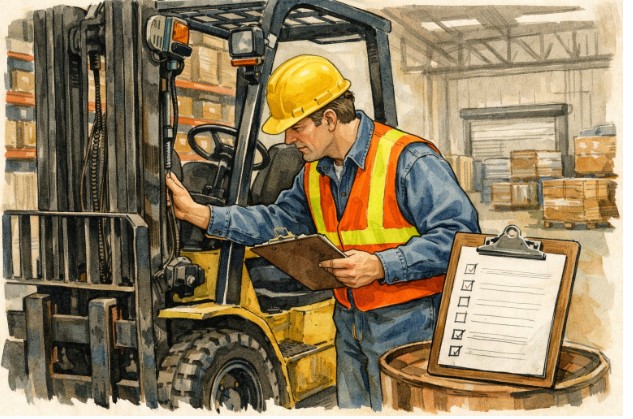
Before each use, operators should conduct thorough inspections of their forklift. Check for any visible damage, leaks, worn tires, and fluid levels, and ensure that forks and mast are in good condition. Safety systems such as lights, alarms, brakes, and horns should also be tested for functionality. If any issues are found, the forklift should be removed from service until repairs are completed. Routine inspections help catch small problems before they can become serious hazards, contributing to a safer workplace (OSHA.com Forklift Safety).
- Be Aware of Your Environment
Forklift operators should maintain constant awareness of their surroundings. This includes looking out for pedestrians, other vehicles, wet or obstructed floors, ramps, or drop-offs. Use mirrors, alarms, and lights to increase visibility in busy or low-light areas. Always approach blind corners slowly and use your horn to warn others of your presence. By staying attentive, operators can avoid collisions and serious accidents that could cost lives and disrupt operations.
- Understand Load Capacity and Stability
Every forklift has a data or capacity plate that details its operational limits. Operators must pay close attention to load weights, balance, and the center of gravity at all times. Never exceed the maximum rated load. Be mindful of load length, shape, and placement as these can alter the forklift’s stability and might cause tip-overs. The stability triangle principle (which refers to the unseen points of balance for a forklift) should be respected during every lift to preserve balance and control.
Modern warehouses often have complex layouts and evolving storage demands. Ensuring load stability is not just about operator safety, but also about protecting inventory, equipment, and people working nearby.
- Utilize Safety Features and Technology
Advances in forklift technology have introduced a range of safety features designed to minimize risk. These might include stability systems, rear grab bars with horn buttons, blue safety lights, high-visibility cabs, and backup alarms. Operators should use these features consistently to increase awareness and prevent accidents. Management should stay informed about new safety technologies available for their equipment, factoring these into purchase and upgrade decisions.
- Follow Safe Operating Procedures
- Always wear seatbelts when operating a forklift to reduce injury risk in case of a tip-over.
- Do not exceed rated load limits and ensure all loads are properly balanced and secured.
- Maintain safe distances from platform edges, ramps, and loading docks.
- Drive at appropriate speeds, slow down in busy areas, and yield to pedestrians.
Sticking to these standard procedures is crucial regardless of experience. Cutting corners with safety puts everyone at risk.
- Implement Pedestrian Safety Measures
To enhance pedestrian safety, workplaces should use barriers or marked lines to separate pedestrians from forklift travel routes. Forklifts should be equipped with flashing lights and alarms. Using wall-mounted mirrors helps eliminate blind spots. Enforcing speed limits and insisting on attentive driving further protects workers on foot. Training employees to recognize forklift traffic zones and practice awareness is equally important.
- Regular Maintenance and Preventive Measures
Ongoing maintenance is key to keeping forklifts functioning properly. Regularly scheduled inspections and tune-ups prevent equipment from breaking down unexpectedly and help identify components that need attention. Implementing a dedicated maintenance program and encouraging operators to report issues is a proven strategy for reducing workplace incidents and extending equipment life.
By adopting these safety tips, forklift operators and managers create safer environments and significantly lower the likelihood of accidents. Remaining dedicated to ongoing education, inspection, and technological advancements secures both personal well-being and business productivity for the long term.