


Introduction
Balance, making decisions, and making strategic trade-offs are the building blocks of project management. The triple restriction is one of the most fundamental ideas that helps to define this equilibrium. No matter how big or little, every project has to work within restrictions that might make or break it. Project managers may plan well, talk clearly, and get consistent results if they know how these restrictions work together.
The triple constraint is not simply an idea. It has a direct impact on schedules, budgets, team performance, and the happiness of stakeholders. When one part changes, the others have to alter too. This article goes into great length on the triple constraint’s history, parts, pros and downsides, and how it is still relevant today. It is helpful for both novices and experienced experts.
The Triple Constraint: What Is It
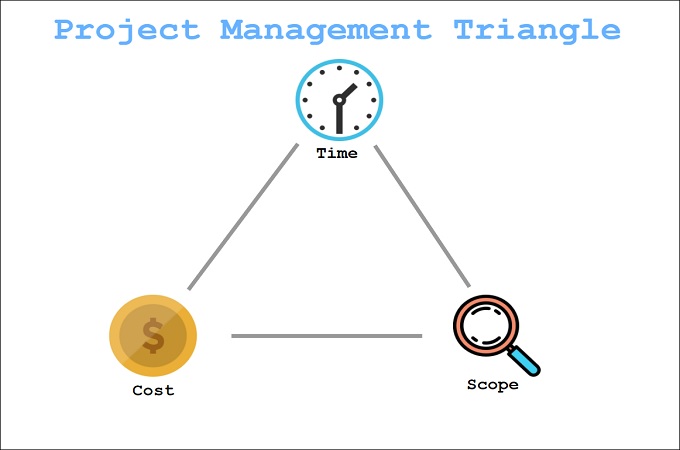
The triple constraint is a basic project management tool that shows the three main limits of each project: time, cost, and scope. These three things are all connected, so if one of them changes, the other two will too. Project managers utilize this model to weigh their options and make smart choices throughout the life of the project.
The notion underlying the triple constraint is simple but very strong. You might need to raise the budget or cut the scope if you want to finish a project faster. If the budget is lowered, the project may take longer or some features may have to be taken out. This ongoing balancing act is what makes project management work.
The Triple Constraint’s Beginning and Growth
The triple constraint came up in the middle of the 20th century, when formal project management procedures began to take hold. As fields like construction, engineering, and defense took on more complicated projects, they needed a mechanism to keep track of all their many objectives. The triple constraint became a common way to teach project management over time.
The triple constraint was first used for physical projects, but it has since been applied for software development, marketing campaigns, research endeavors, and programs to change organizations. It is still applicable today because every project still has limits on time, money, and scope, no matter what approach is used.
The Three Main Parts of the Triple Constraint
Time Constraint
Time is the timetable, deadlines, and milestones for the project. It includes the lengths of tasks, their dependencies, and the date they are due. Bad time management can lead to delays, higher expenses, and unhappy stakeholders. Time is generally the most obvious limit, since missing deadlines is easy to see.
Cost Limit
The budget for the project comprises the cost of labor, supplies, tools, and overhead. When money is tight, you need to plan and keep an eye on things carefully. Going over the budget could mean not getting approval, while not having enough money could mean lower quality or slower pace.
Limitations of Scope
Scope tells you what the project will give you. It has requirements, features, functions, and deliverables. When new needs are introduced without changing the time or cost, this is called scope creep. This can cause things to become out of balance. To stay in control, it’s important to manage scope.
How the Triple Constraint Works Together
The power of the triple constraint comes from how its parts work together. There is no such thing as an isolated limitation. At least one of the others must change to make up for the change in one. This interdependence helps project managers think about what will happen if they make a decision before they do it.
For instance, the scope of the project grows if stakeholders ask for more features late in the project. The project manager must either extend the deadline or raise the budget in order to keep the quality high. Not paying attention to this relationship might lead to exhaustion, bad quality, or failure.
The Triple Constraint A look at the table
| Constraint | Definition | Common Challenges | Management Focus |
|---|---|---|---|
| Time | Project schedule and deadlines | Delays, dependencies | Planning and tracking |
| Cost | Project budget and expenses | Budget overruns | Cost control |
| Scope | Project deliverables and requirements | Scope creep | Requirement management |
Why the Triple Constraint is Important in Project Planning
The triple restriction is a good way to set realistic expectations during the planning stage. It helps project managers set priorities and make sure that all stakeholders are working toward the same goals. Without this structure, projects could have timelines that are too tight, budgets that are too low, or outputs that aren’t clear.
Knowing what you can’t do makes it easier to talk to each other. Stakeholders know the pros and cons of each choice, and teams know why they make specific choices. This openness fosters trust and lowers conflict throughout the project’s life cycle.
Five Points on How to Handle the Triple Constraint
To manage the triple constraint well, you need to be disciplined and proactive, and you need to find a way to meet all of the expectations without lowering quality or team morale.
- To avoid misunderstandings and unplanned changes, project managers need to explicitly define the scope at the start and write down the requirements.
- To prevent rushing through work and missing deadlines, it’s important to be able to accurately estimate time and make reasonable schedules.
- Cost planning should contain extra money to cover risks and costs that come up unexpectedly.
- Keeping an eye on progress all the time helps find problems early and lets you fix them before they get worse.
- Strong communication with stakeholders makes sure that any changes to time, cost, or scope are talked about openly and authorized with a full understanding of how they will affect things.
The Triple Constraint: What It Can Do for You
The triple constraint makes it easier to understand and organize complicated projects. One big benefit is that it helps you make better decisions. Project managers can rapidly figure out how changes will influence the overall balance when they get requests for changes or see risks.
Another good thing is being responsible. Teams know what they need to do within certain limits, and stakeholders can see what those limits are. This mutual knowledge lowers unnecessary expectations and makes it easier to work together.
The Triple Constraint’s Limits
The triple constraint is helpful, but it has certain problems. It doesn’t directly take into consideration quality, risk, or stakeholder satisfaction, which are all very important in modern projects. Some critics say that putting too much emphasis on limits can stifle creativity or adaptability.
Also, not every project gives the same amount of weight to limitations. For instance, research initiatives might put learning ahead of rigorous deadlines, whereas emergency response projects might put time ahead of expense. It’s important to understand these small differences.
The Triple Constraint in Agile and Modern Frameworks
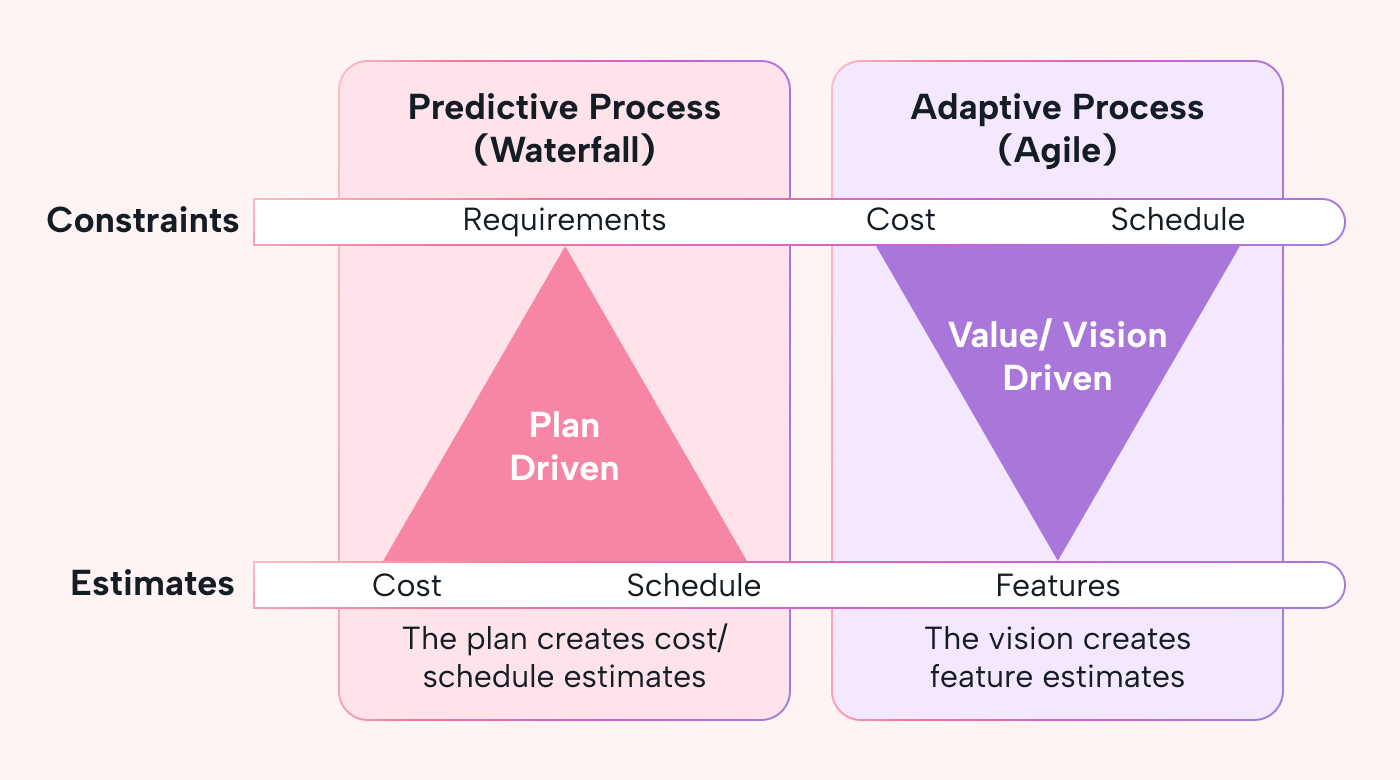
People often see the triple constraint differently in agile settings. Agile teams usually fix time and cost instead of scope, which can change. This method allows for flexibility and ongoing improvement.
The idea is still useful, even in agile systems. Teams still work within budgets and deadlines, and they make judgments about scope based on value. The triple restriction just changes to make iterative delivery possible.
The Triple Constraint in Real Life
The triple constraint is quite clear in construction projects. Adding to a building’s design makes it bigger, which takes more time and money. In software development, introducing features late in the sprint might push back release schedules or need more developers.
The same idea applies to marketing campaigns. A bigger campaign needs more money or more time to finish. These examples show that the triple constraint is always true.
What the Project Manager Does to Balance Constraints
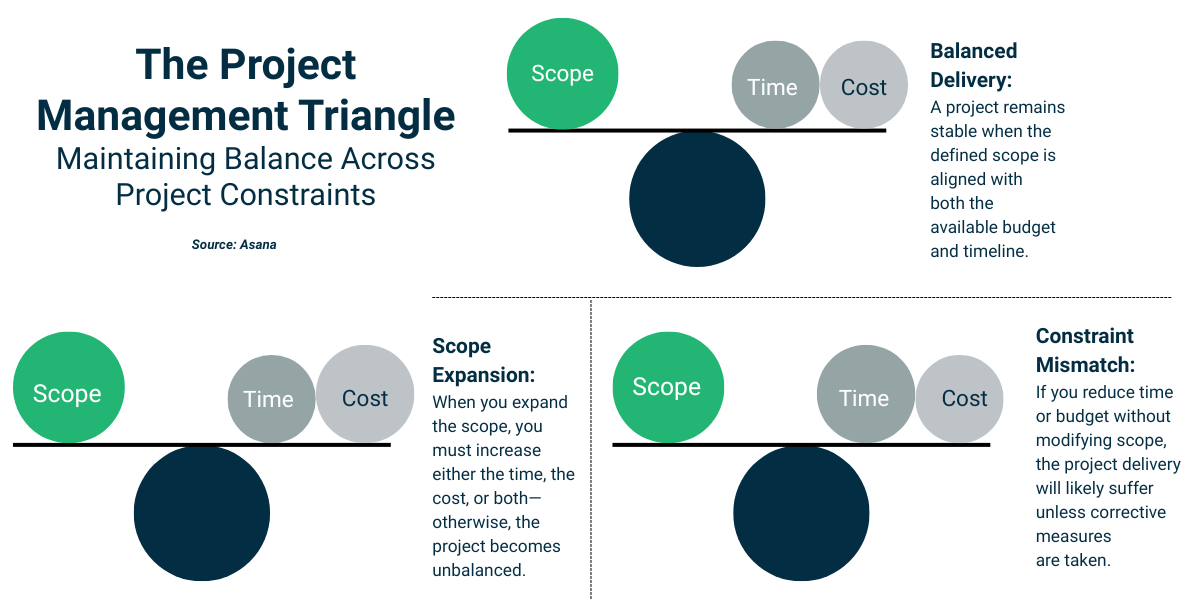
The project manager is in charge of keeping the triple constraint in balance and is the principal person who makes decisions. To do this job, you need to be able to negotiate, analyze analytically, and lead. Project managers need to look at trade-offs objectively and help stakeholders make choices that make sense.
Good managers don’t get rid of limits; instead, they use them to their advantage. They expect problems, make backup plans, and adjust their plans when things change.
How to Measure Success Beyond the Triple Constraint
The triple constraint only looks at time, cost, and scope. But in today’s world, project success also means quality, customer happiness, and commercial value. Many groups add these things to the traditional model.
But the triple limitation is still the starting point. If you don’t keep these three things in check, it will be much harder to reach higher-level success measures.
Why the Triple Constraint Is Still Important Today
The triple constraint is still useful, even with better tools and methods, because there are always limits. There are limits on resources, timeframes, and requirements that need to be set. Technology may change the way projects are done, but the rules stay the same.
Professionals can confidently deal with complexity if they understand this model. It gives everyone a common language for talking about trade-offs and making sure that everyone on the team and in leadership has the same expectations.
In conclusion, mastering the triple constraint is the key to project success.
The triple constraint is not just a theory; it is a real-life structure that guides every project. Project managers may make better choices, lower risk, and get better results if they know how time, cost, and scope are related. Being able to handle the triple limitation means greater planning, clearer communication, and stronger leadership. Recognizing and balancing these limits is important for long-term success, whether you’re running a small project or a big business program.
Read More :- GDTJ45 Builder Software Code Development: Complete Guide for Modern Builders